Parametric Funnel AI Prompt

Recently, I wanted a funnel for a certain task at work. I found that neither stores nor Amazon had the right configuration that I wanted. So it occurred to me that I could use my 3D printer to make a customized funnel. However, given the low level of my CAD skills, it would require a significant learning curve to design the funnel. So naturally, I turned to AI.

Specifically, I went to Claude. Claude explained that it could not directly generate an STL file, but it could generate a text script that I could copy-and-paste into OpenSCAD, which could then generate the STL file for me. OpenSCAD is a free program that you can download onto your computer, so no problem there.

You don’t need to know how to use OpenSCAD. You’ll be using it just to press a single key for the conversion of text script to STL.

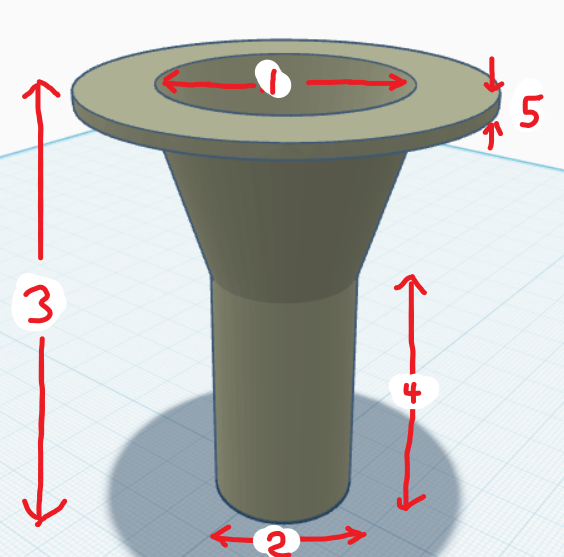
Anyhow, these are the funnel specs that your AI prompt will require (specify whether mm or in for dimensions):

  1. Top opening diameter (inner or outer)
  2. Spout diameter at tip (inner or outer)
  3. Total height
  4. Spout length
  5. Wall thickness
  6. Optimal extras such as a flat rim or brim at the top

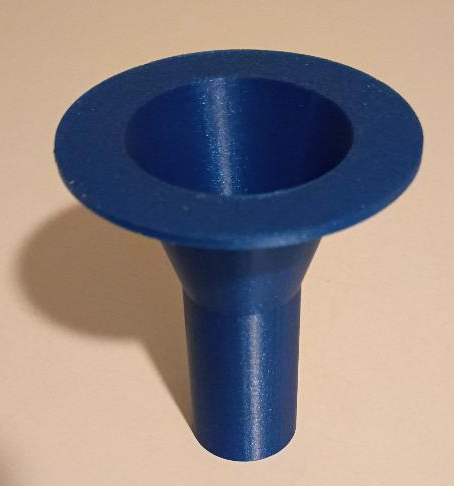
(As you can see, I specified a wide brim/rim to ensure that the funnel didn’t slip during printing.)

Claude suggests using a wall thickness that is a multiple of the nozzle width. Remember that the outer diameter will be equal to the inner diameter plus twice the wall thickness (and vice versa).

Once you make the prompt, Claude will generate the script. And now it’s time to convert the script into an STL file using OpenSCAD. You can download and install OpenSCAD, no biggie. And then the actual file conversion is very simple:

  1. Open OpenSCAD.
  2. Choose New.
  3. Copy and paste Claude’s script into OpenSCAD.
  4. Press F6 in OpenSCAD.
  5. Export as STL file.

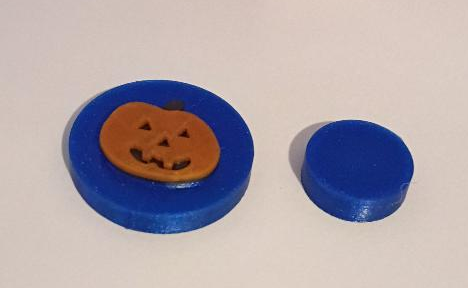
I then loaded the STL into TinkerCAD to flip it for printing and to make a minor mod.

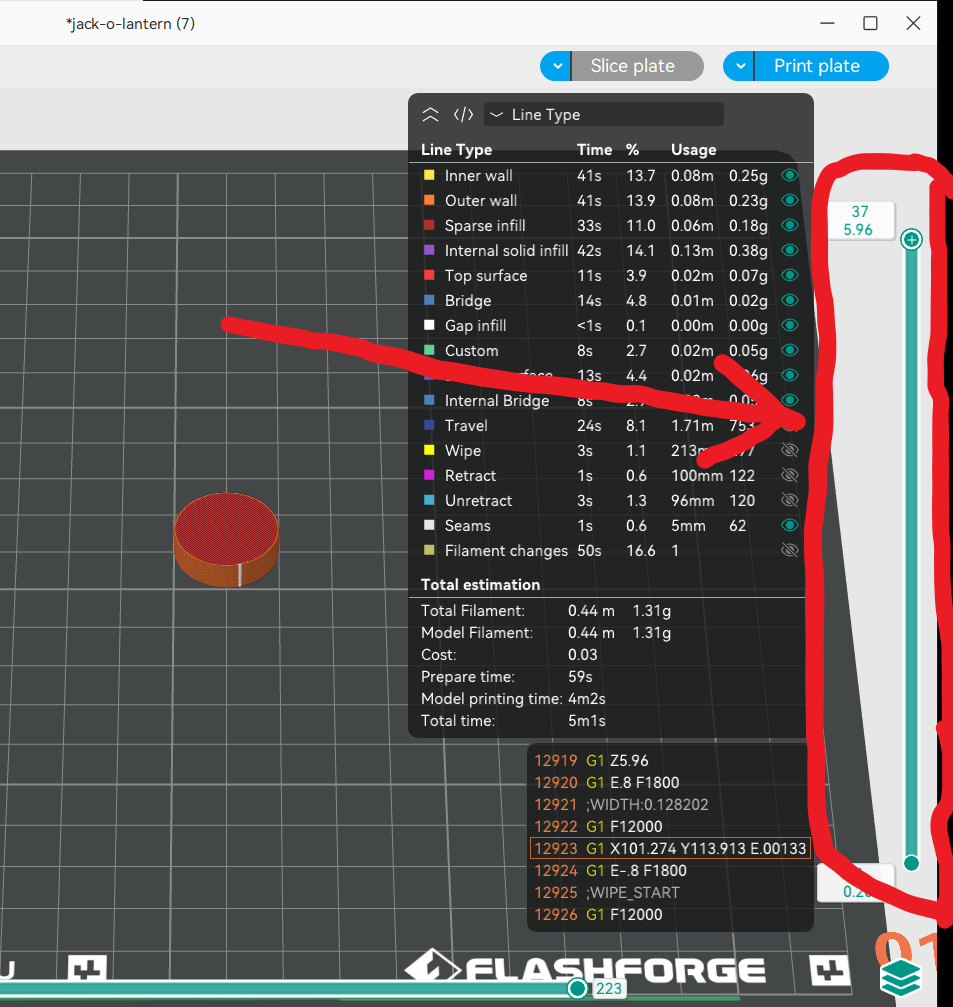
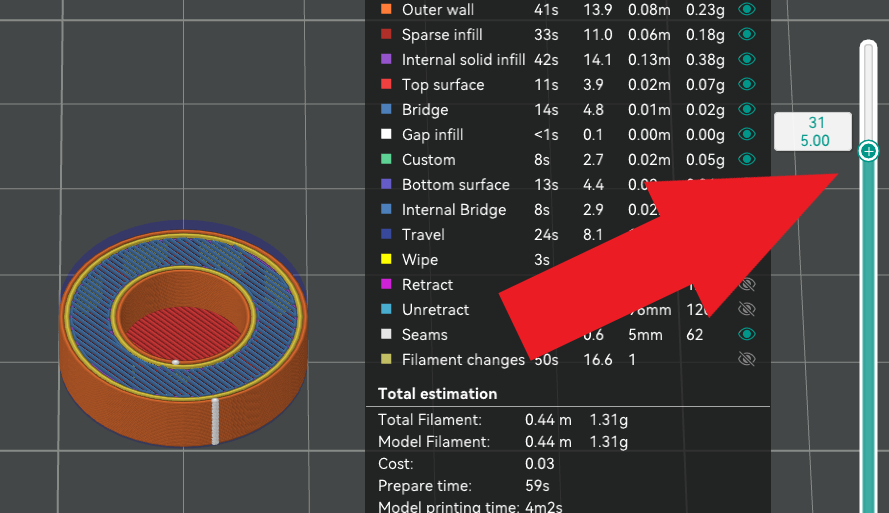
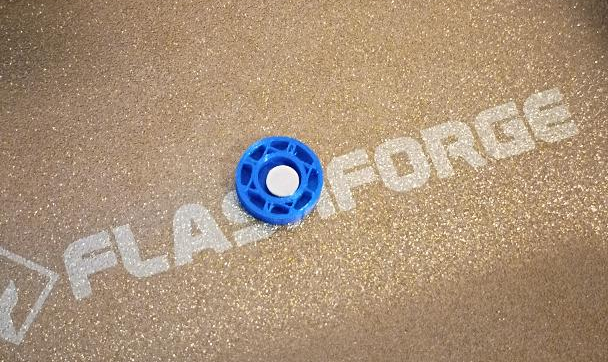
Here’s how it turned out (using a Flashforge AD5X):

And that’s all you have to do. Happy funnel-making!

***

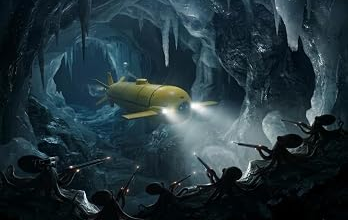
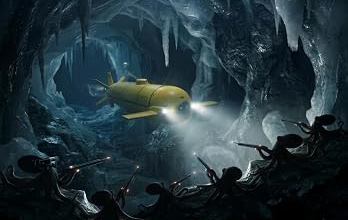
Do you like science fiction? Well, I write science fiction! I use AI for the covers but hand-craft the stories the old-fashioned way, by using an antique meat-brain. My latest novella is about first contact with a civilization of intelligent octopoids (that is, octopus-like beings) living in the underground ocean of Europa, moon of Jupiter. It’s called Europa Dive. I hope you check it out and enjoy!

Posted in Uncategorized | Tagged , | Leave a comment

Saturn’s Moons by Size

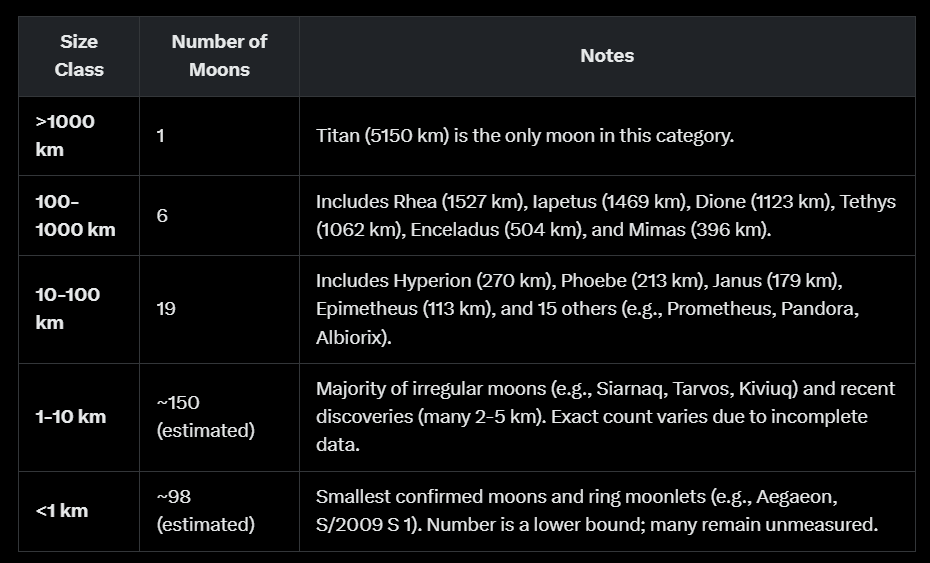
Astronomers recently announced that they have identified 274 moons around Saturn. I asked Grok for a numerical breakdown of size class vs. number of moons in that size class.

Two facts stand out.

  1. Titan is HUGE compared to the rest of the Saturnian moon system, and accounts for over 95% of the Saturnian moon system’s mass!
  2. I would expect the smaller the size class, the more moons. This is not the case for the smallest class. Perhaps because there are many moons in this class yet to be discovered?

Now let me put on my Interplanetary Real Estate Developer Hat.

Ceres has a diameter of 946 km, yet constitutes 39% of the mass of the Asteroid Belt. Saturn has five moons larger than Ceres. Thus, Saturn’s moon system has several times the mass of the Asteroid Belt. Yes, Saturn is much farther away than the Asteroid Belt, but in terms of O’Neill Colony space colonization, Saturn’s moon system has a much bigger potential.

That is, unless the Solar Council designates Titan as an Interplanetary Heritage Site. I have to admit I’m not really opposed to that.

Posted in Uncategorized | Tagged , , | Leave a comment

A Simple Solution to the Lunar Probe Tip-Over Problem

Grok reports:

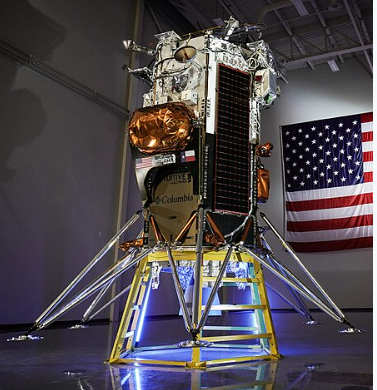
The Intuitive Machines lander, named Athena, touched down near the Moon’s south pole on March 6, 2025, but appears to have tipped over on its side, repeating the fate of its predecessor, Odysseus, which also tipped over after landing on February 22, 2024.

This isn’t a new problem in lunar exploration. Other moon probes have indeed failed or encountered significant issues due to tipping over. For example:

Luna 23 (1974): A Soviet probe designed to collect and return lunar soil samples landed on the Moon but tipped over due to an uneven surface in the Mare Crisium region. It remained operational briefly but couldn’t drill or complete its sample return mission because of its orientation.

SLIM (2024): Japan’s Smart Lander for Investigating Moon, launched by JAXA, successfully soft-landed on January 19, 2024, but tipped over onto its side after one of its engines malfunctioned during descent. It still managed to send data and images, and remarkably, it survived the lunar night to communicate again later.

It’s not hard to figure out why this keeps happening. Just look at the photos. Here’s the Athena probe:

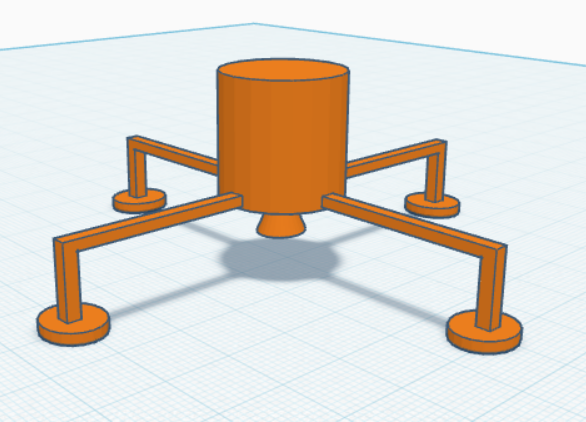
You can plainly see this design has too much vertical and not enough horizontal. It’s just asking to be tipped over. Here’s a more stable configuration of probe and widely-spread landing pads:

“But the landing legs will have too much mass penalty!” No they won’t. Lunar gravity is 1/6 Earth gravity, so the legs only have to be 1/6th as sturdy — meaning that their mass need be only 1/6 as much as Earth-based struts.

Whatever the cost penalty for the extra mass of widely spread landing legs, it’s nowhere near the cost of losing the entire probe.

Posted in Uncategorized | Leave a comment

Can the Space Age Destroy Itself?

The book, When the Heavens Went On Sale, by Ashlee Vance, tells of a company called LeoLabs which operates a network of radar stations around the world. The stations track every object in Low Earth Orbit (= LEO, hence the name). Vance states, “The big stuff is easy enough to spot, but LeoLabs’ technology was so good that it could pick out objects just a couple centimeters in size.”

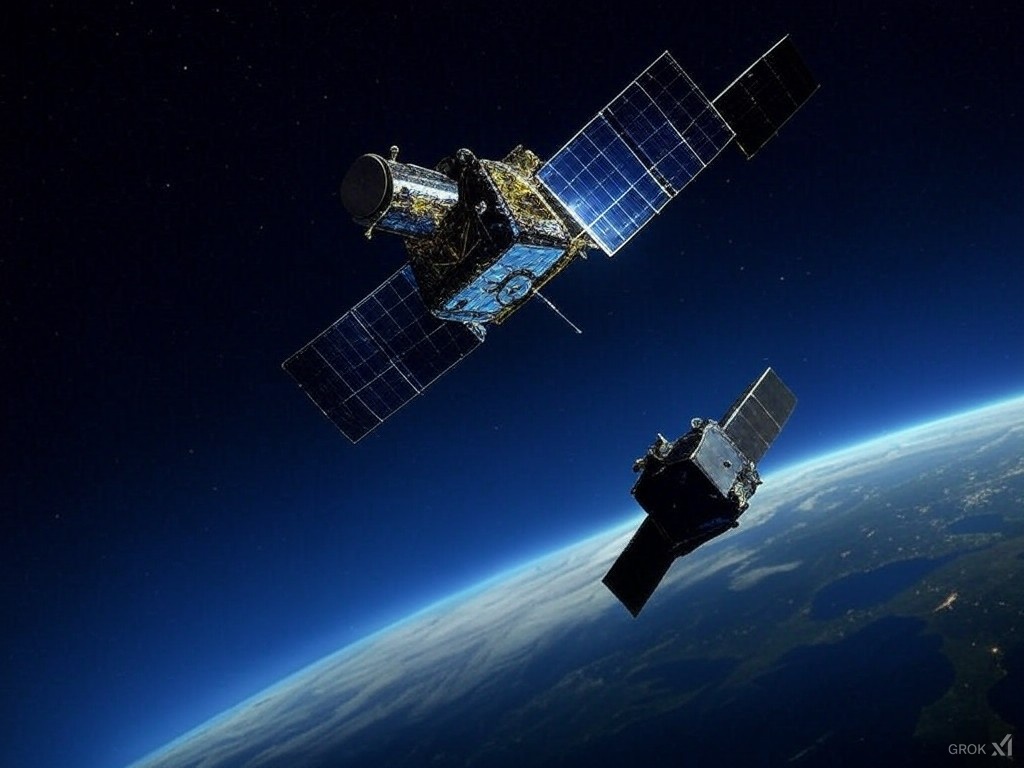
There is a growing concern that with so many objects in space now, the probability of a collusion is increasing dramatically. So LeoLabs is in the business of issuing alerts to its clients regarding whether another orbiting object is in danger of colliding with their orbiting object. With relative velocities of kilometers per second, such collisions could be fatal.

Vance: “In 2022, LeoLabs was sending out an astonishing 400 million collision alerts per month.”

Since 2022, thousands of additional satellites have been launched. Grok states that 2877 satellites were launched in 2023, while website Orbiting Now states that there are currently 7423 satellites in low earth orbit, the most crowded region. So the situation is only getting more intense.

The loss of a single satellite can be a multi-million to billion-dollar tragedy for its owner, but what of the danger of a loss of all satellites?

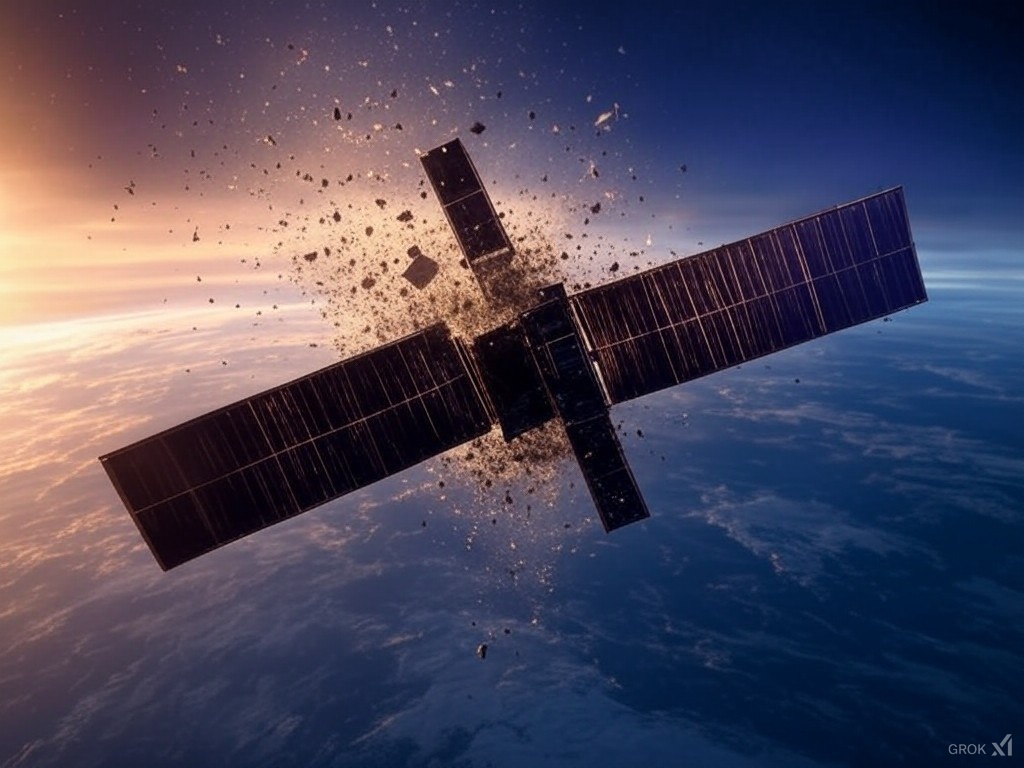
This is called the ‘Kessler Syndrome.’ A satellite is hit by another orbiting object with a velocity multiples of a bullet. The satellite fragments then become dangers to other satellites, and if those satellites are hit, even more fragments will be created. It’s like a nuclear chain reaction. It might not stop until Earth’s multiple satellite constellations are converted into clouds of useless debris posing a menace to future satellites and, of course, space exploration efforts that must pass through the debris clouds in order to reach the Moon, Mars, and other destinations.

So this is what we are doing to prevent the Kessler Syndrome:

  • Satellites are equipped with maneuvering rockets so that when alerts are issued, they can be commanded to move out of the way of onrushing objects.
  • Satellite are assigned carefully calculated orbits that will avoid collision with other satellites.
  • Obsolete satellites are de-orbited.
  • Satellites with limited missions (such as research ‘cubesats’ are placed in low orbits where atmospheric density is enough to gradually cause orbital decay and re-entry.

In addition to an accidental Kessler Syndrome, it’s possible for anti-satellite missiles and lasers to destroy the military satellites of other nations. The best tracking system in the world won’t be able to stop a Kessler Syndrome then, and we must wonder if that will bring the Space Age to an end (though of course a war between major world powers would do that too).

In the future, ground-based lasers may be used to de-orbit space junk. However, what if a military attack on satellites deploys pellets with stealth technology? If tracking radar can’t see the targets, the lasers can’t destroy the targets.

It seems that while the spacefaring superpowers will tolerate the reconnaissance satellites of their adversaries, using satellites for military command and control will incentivize the artificial creation of a Kessler Syndrome. That negates the value of such satellites, and as a side effect, puts a stopper on the Space Age. The only way to win this game is not to play.

Posted in Uncategorized | Tagged | Leave a comment

The Square on Mars Not So Easy to Dismiss

There are people who think they are doing a service to ‘Science’ by ‘debunking’ any indication of the extraordinary. This trait is on display with their dismissive response toward the recent publicity regarding the so-called Square on Mars.

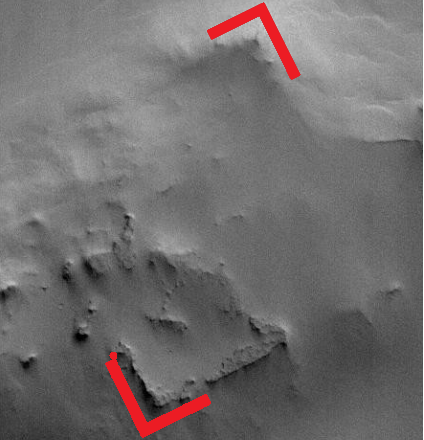
In case you were wondering, the Square on Mars is a real feature on the surface of Mars. It was photographed by the orbiting Mars Orbiter space probe in 2001. You can find the photograph on the Arizona University Mars Orbiter Camera archive here.

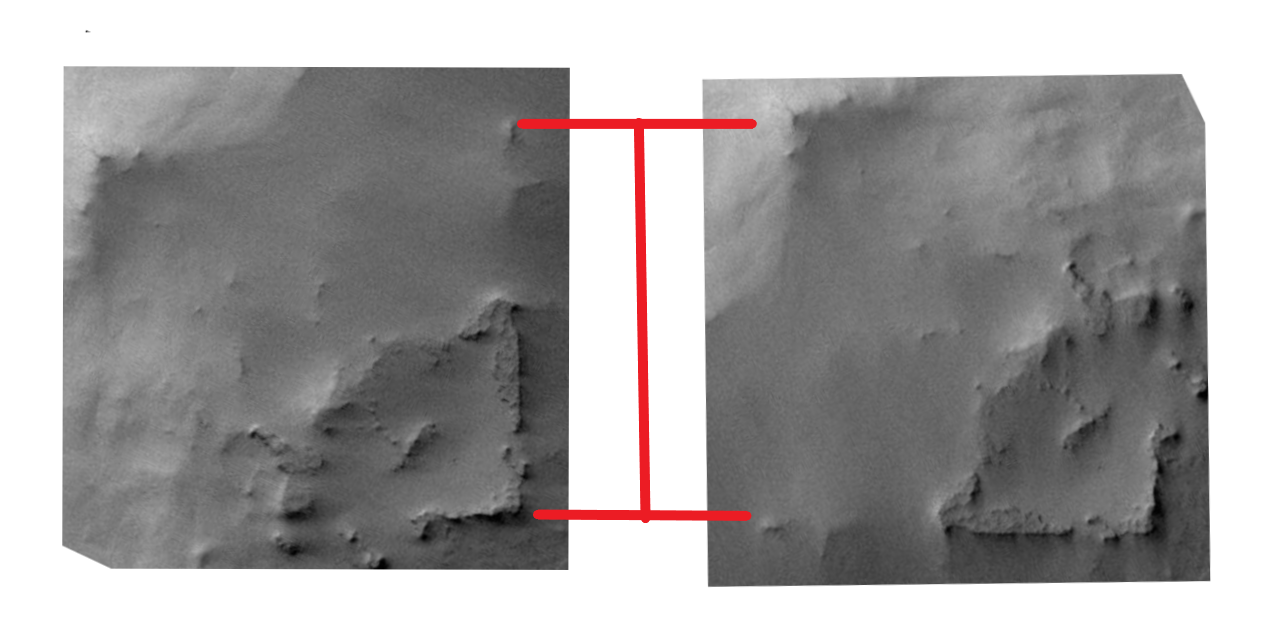
The debunkers will say, “It’s been Photoshopped. It doesn’t really look like a square.” But is this true? Here’s the official photo:


A square has four sides of equal length. So let’s re-orient the images so that the adjacent sides can be compared:


A square has right angle corners. Let’s compare the corners with right angles:

Is it a perfect square? No, but that’s pretty close for a random geologic feature.

Skepticism is an important tool in scientific discovery, but discovery is even more important. And in a few more years, regardless of how skeptical or gullible we choose to be, the answer to the question raised by this image will be discovered. Maybe it would be best to keep an open mind.

Posted in Uncategorized | Tagged , , , , , , | Leave a comment

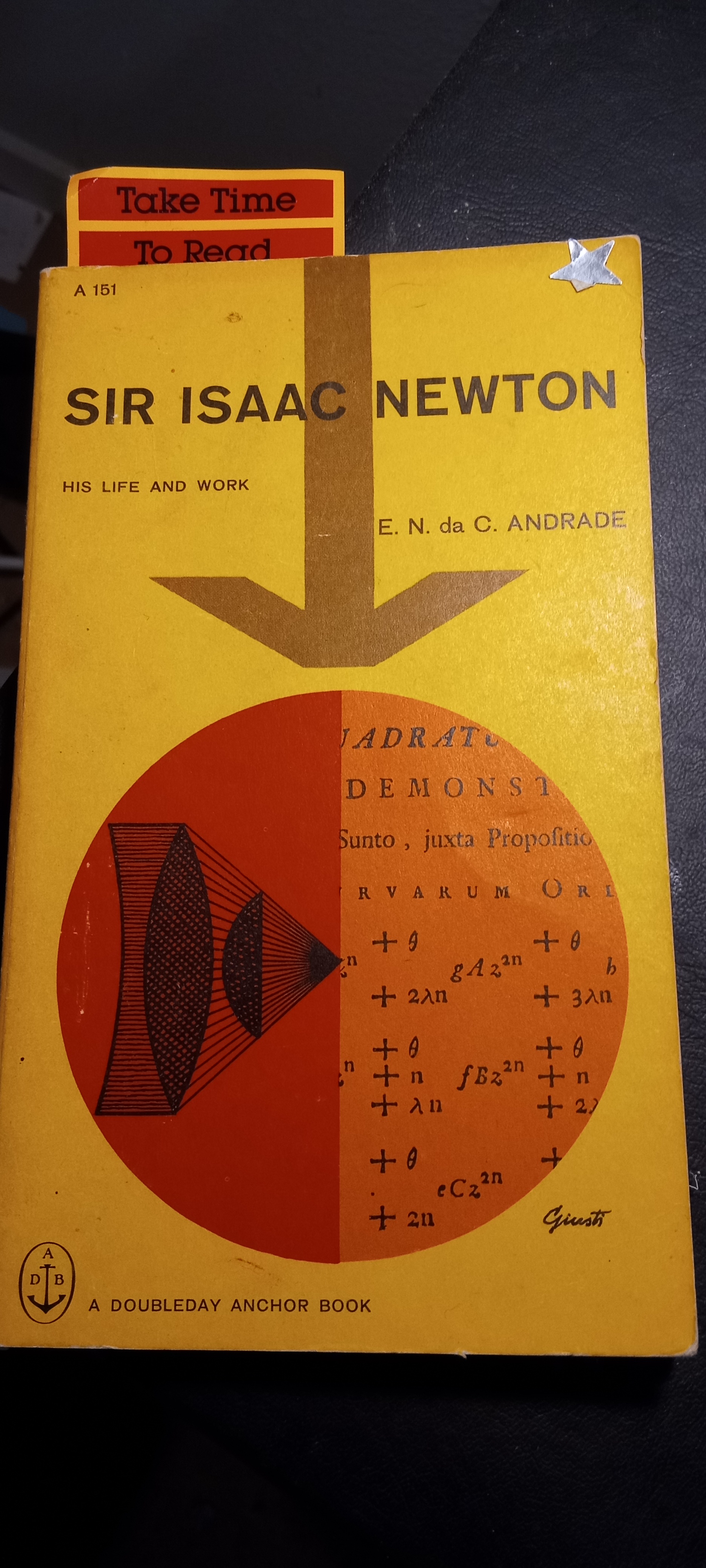
Was Newton All That?

This book was written in 1958. I like older books for biographies because they focus on what the person did rather than his personal life. In the case of Newton, a modern book would probably spend an inordinate amount of time speculating that he was gay. I would rather know about the thought processes that led to his ideas.

While reading this book, however, I got the uncomfortable feeling that maybe Newton wasn’t ‘all that’ he’s been cracked up to be. There was this recurring sequence with other scientists: (1) A scientist would announce an idea, (2) Newton would claim that he thought of it himself years earlier but refrained from publishing it. Okay, so why did you refrain from publishing it at the time? Because I don’t care about publicity. Okay, so if you don’t care about publicity, why are you publishing it now?

If you know anything about calculus, you know that there was a controversy between Newton and a guy named Leibnez over who invented it. Leibnez published first, but Newton claimed to have invented it first but refrained from publishing because . . . yada yada. The British Royal Society set up a committee to investigate the claim. Small catch: Newton was President of the BRS and the committee was stacked with his friends. Even so, the best the committee could do was anoint Newton the ‘co-inventor’ of calculus.

Then there was a guy named Hooke, who suggested in a letter to Newton that gravity might function according to an inverse-square law of distance. Newton claimed that he had come up with the idea independently and refused to acknowledge Hooke.

Then there was a guy named Flamsteed, who was an astronomer who made a catalog on the motion of the Moon. Newton wanted this catalog published immediately to corroborate his theories, but Flamsteed wanted to hold back because he felt there were errors that needed to be proofed. Newton again used his position as President of the Royal Society to get his way.

Was Newton a great scientist? Sure, if only because while others would say, “Hey, maybe this thing causes that thing,” Newton would actually explicitly state the physical laws and do the math. But he seems disingenuous when he claims that he never cared about publicity and yet at the same time played scientific politics by becoming President of the Royal Society and feuding with others over credit for scientific discoveries.

I guess the take away is that people can achieve greatness yet still be jealous for affirmation. Affirmation appears to be addicting.

Posted in Uncategorized | Tagged , , , , | Leave a comment

Firefighting Drone Train

Imagine a train with rail cars filled with thousands of drones that are programmed to fly buckets out to the Pacific Ocean, scoop up water, and drop on brush fires. The train goes along the California coast to where its needed and releases the drones. Diesel generators provide battery charging.

If each drone costs $1000, even a million drones would cost only $1 billion. That isn’t that much, when neighborhoods of $5 million homes are at stake.

China can choreograph thousands of drones to put on a light show of a dragon flying over a city, so why can’t we program drones to put out a fire?

Posted in Uncategorized | Leave a comment

Re-Entry: Space vs. The 40 Hour Workweek

This is Eric Berger’s second book on SpaceX, the first being Liftoff. Liftoff was about the founding of SpaceX up to the successful launch of the Falcon 1. In this book, Berger covers the story of SpaceX up to the present.

The story covers a lot of ground. Falcon 1 was followed by Falcon 9, a much larger launch vehicle. Then came Falcon Heavy. Then came Dragon capsule. Then re-usable boosters, which at this point is the crown jewel of SpaceX accomplishments and, obviously, is the inspiration for the book’s title and cover.

Musk was very much the central character in Liftoff, but in these pages he is more in the background. Whereas in Liftoff he was the motor than made SpaceX run, here he sometimes seems to be getting in the way. He seems to lose his temper more often, so much so that ends up on the verge of firing his best people, and not so much because they made a blunder but because they said something that he didn’t like.

I respect what Musk has done, and you have to give him credit for doing it. But is he a boss that you’d want to work for?

For example, there’s an incident while SpaceXers are moving a booster cross-country via flatbed trailer. They have to detour into a small town and the trailer has to make a tight turn around a corner. Everyone is on their walkie-talkies, ready to inform the driver if the booster is in danger of brushing against the building. But since they’re inexperienced, it doesn’t occur to them that if they all shout a warning at once, the walkie talkie signals will interfere and cause squelch and the driver won’t hear anyone’s warning. And so the booster was damaged.

Musk accepts the mishap calmly (seemingly) but then one of the people at the scene makes a casual remark relating the incident to a similar incident while moving the Falcon 1 booster, and Musk goes ballistic when he learns about it and phones the supervisor, telling him to fire the guy. The supervisor is driving in his car at the time and the guy in question is sitting next to him. The supervisor hangs up and the guy asks him what Musk said. The supervisor says, “Nothing,” and doesn’t fire the guy, and Musk forgets about it.

The main problem with Musk’s management style is not so much that he fires people by whim but that he consistently drives them into quitting. Story after story in the book confirm that burn-out at SpaceX is a serious problem, and the main reason people stay on is not because of the money and status but because they believe Musk’s vision to colonize Mars, make humanity interplanetary, and ‘spread the light of consciousness throughout the universe.’

That latter goal sounds very poetic, but as many a philosopher has noted, “For happiness to be got, it has to be forgot.” We’re often happiest when we’re least self-aware, and while engineering work can be engrossing, burn-out makes us very conscious indeed — of pain.

If Musk can make Starship reusable, it will open up the solar system to exploration and colonization. No one else in the space business is even close, and most aren’t even focused on such a goal. Thus it seems that humanity has two modes: do-nothing or overwork. Work-life balance is not on the corporate agenda, which appears to be great for the bottom line (for now).

However, if we don’t have time for families, we aren’t going to have quality families, and human consciousness will extinguish because there won’t be human generations to perpetuate it.

I wonder if it’s possible to spread the light of consciousness throughout the universe on a forty-hour work week.

Posted in Uncategorized | Leave a comment

Remembrances of Tech Revolutions Past: My Years at General Motors

You may have seen the Bill Gates comment on My Years With General Motors: ” . . . probably the best book to read if you want to read only one book about business.” Well, what if you want to read more than one book about business?

Sloan was the President and CEO of General Motors about a hundred years ago. Basically, GM was a conglomerate formed of smaller car companies and companies that provided parts for car companies. From around 1920 to the middle of the twentieth century, Sloan got GM out of financial difficulties and presided over its growth.

But I really didn’t get a lot out of reading the book, and had to stop at page 200. Up to that point the book was largely just shout-outs to fellow associates, and, over and over, “We formed a committee and got financing.” It’s really the Black Box Theory of management without much discussion about the products themselves.

Sloan does recount Henry Ford’s great blunder. Ford dominated the automobile market in the early years. He did so by creating an ultra-cheap but high quality (for the time) car. He accomplished this by concentrating all his manufacturing efforts on a single type of vehicle, the Model T. He was so focused on the idea of minimizing production costs that he allowed no product variations. Famously (or infamously) he said, “You can have the Model T in any color you want, so long as it’s black.”

Ford’s blunder came when people would upgrade to a new car and sell their old Model Ts. Soon Ford’s production of new Model Ts was in competition with a gigantic market of used Model Ts, and sales declined despite — indeed, because of — a prosperous economy. Meanwhile, General Motors was sitting pretty with a product line of better, more expensive cars that consumers were eager to upgrade to.

More than reshuffling the org charts, this largely accounts for GM’s success. But as Sloan mentions, Ford should have seen the market shift coming and retooled his production line earlier.

I don’t see why Gates so highly praised this book. It doesn’t give you any insights into how Microsoft became successful. Or maybe I’m not good at reading between the lines. If I was, maybe I’d realize the typical day in the life of a successful manager of a large corporation is about committees and financing.

Anyhow, Sloan didn’t break the company. So kudos there.

And perhaps the key takeaway for engineers and tech people in general is, “Marketing matters.” That really annoys me as someone who deeply respects those who actually create products and improve productivity, but there it is.

Posted in Uncategorized | Tagged , , , , | Leave a comment

Chat-GPT is stumped by a logic puzzle

>There are three guys. They will answer questions true or false. One guy will always tell the truth. Another guy will always lie. The third guy will randomly tell the truth or lie. You are allowed to ask three questions total. Can you determine which guy is which?

Yes, it is possible to determine which guy is the truth-teller, the liar, and the random responder by asking three questions with a specific strategy.

Here’s a possible strategy to determine the identities of the three guys:

  1. Ask any person, “Are you the truth-teller?”
  • If they answer “yes,” they are either the truth-teller or the random responder.
  • If they answer “no,” they are the liar.
  1. Ask another person, “Is the first guy a truth-teller?”
  • If they answer “yes,” they are either the truth-teller or the random responder.
  • If they answer “no,” they are the liar.
  1. Ask the last person, “What would the first or second guy say if I asked them if you were the truth-teller?”
  • If they answer “truth-teller,” they are the truth-teller.
  • If they answer “liar,” they are the liar.
  • If they hesitate or give an inconsistent answer, they are the random responder.

Using this strategy, we can determine the identity of each person based on their answers to the questions. The person who always tells the truth will answer truthfully to all questions, the person who always lies will always give the opposite answer to what they know is true, and the person who randomly answers may give either a truthful or false answer to any given question.

>Actually, wouldn’t the liar say “yes,” if you asked if he was the truth-teller?

You are correct! Thank you for pointing that out. The first question should be phrased differently to identify the liar. Instead of asking, “Are you the truth-teller?” we should ask, “Are you the person who always tells the truth?”

In this case, the liar will answer “yes” because they always lie, so they cannot be the person who always tells the truth. The truth-teller will answer “yes,” and the random responder could answer either “yes” or “no.”

The revised strategy would be:

  1. Ask any person, “Are you the person who always tells the truth?”
  • If they answer “yes,” they are the truth-teller.
  • If they answer “no,” they are either the liar or the random responder.
  1. Ask another person, “Is the first guy the person who always tells the truth?”
  • If they answer “yes,” they are the truth-teller.
  • If they answer “no,” they are either the liar or the random responder.
  1. Ask the last person, “What would the first or second guy say if I asked them if you were the truth-teller?”
  • If they answer “truth-teller,” they are the truth-teller.
  • If they answer “liar,” they are the liar.
  • If they hesitate or give an inconsistent answer, they are the random responder.

This revised strategy should correctly identify the truth-teller, liar, and random responder.

>once again, wouldn’t the liar answer “yes” to “Are you the person who always tells the truth?”

I apologize for the mistake in my previous response. You are correct, the liar would answer “yes” to the question “Are you the person who always tells the truth?” since they always lie and are not the person who always tells the truth.

So the first question in the revised strategy should be changed again to identify the liar, and it should be phrased as follows:

  1. Ask any person, “Are you the person who always tells lies?”
  • If they answer “yes,” they are the liar.
  • If they answer “no,” they are either the truth-teller or the random responder.

The rest of the strategy remains the same:

  1. Ask another person, “Is the first guy the person who always tells the truth?”
  • If they answer “yes,” they are the truth-teller.
  • If they answer “no,” they are either the liar or the random responder.
  1. Ask the last person, “What would the first or second guy say if I asked them if you were the truth-teller?”
  • If they answer “truth-teller,” they are the truth-teller.
  • If they answer “liar,” they are the liar.
  • If they hesitate or give an inconsistent answer, they are the random responder.

This revised strategy should correctly identify the truth-teller, liar, and random responder. Thank you for bringing this to my attention, and I apologize for any confusion caused by my previous responses.

>If you ask the liar, “Are you the person who always tells lies?” wouldn’t he say “no.”

You are correct, my apologies for the confusion. If we ask the liar, “Are you the person who always tells lies?” they would answer “no,” since they always lie and they are not the person who tells the truth.

To identify the liar, we can ask the following question instead:

  1. Ask any person, “If I asked you if the sky is blue, would you say yes?”
  • If they answer “yes,” they are either the truth-teller or the random responder.
  • If they answer “no,” they are the liar.

The rest of the strategy remains the same:

  1. Ask another person, “Is the first guy the person who always tells the truth?”
  • If they answer “yes,” they are the truth-teller.
  • If they answer “no,” they are either the liar or the random responder.
  1. Ask the last person, “What would the first or second guy say if I asked them if you were the truth-teller?”
  • If they answer “truth-teller,” they are the truth-teller.
  • If they answer “liar,” they are the liar.
  • If they hesitate or give an inconsistent answer, they are the random responder.

Again, I apologize for the mistake in my previous responses and thank you for bringing this to my attention.

>If I asked the liar, “If I asked you if the sky is blue, would you say yes,” the liar would say, “yes,” because he’s lying and he would actually say, “no.”

You are correct, my apologies for the continued confusion. To correctly identify the liar, we need to ask a different question. Here is an updated strategy:

  1. Ask any person, “If I asked you if 2+2=5, would you say yes?”
  • If they answer “yes,” they are either the truth-teller or the random responder.
  • If they answer “no,” they are the liar.
  1. Ask another person, “Is the first guy the person who always tells the truth?”
  • If they answer “yes,” they are the truth-teller.
  • If they answer “no,” they are either the liar or the random responder.
  1. Ask the last person, “What would the first or second guy say if I asked them if you were the truth-teller?”
  • If they answer “truth-teller,” they are the truth-teller.
  • If they answer “liar,” they are the liar.
  • If they hesitate or give an inconsistent answer, they are the random responder.

Again, I apologize for any confusion caused by my previous responses. Thank you for helping to clarify the correct strategy.

>But the truth teller would say that 2+2 does not equal 5.

You are correct, my apologies again for the mistake in my previous response. Here is an updated strategy that should work:

  1. Ask any person, “If I asked you if the other two guys are the truth-teller, would you say yes?”
  • If they answer “yes,” they are either the liar or the random responder.
  • If they answer “no,” they are the truth-teller.
  1. Ask the second person, “Is the first guy the truth-teller?”
  • If they answer “yes,” they are the liar.
  • If they answer “no,” they are either the truth-teller or the random responder.
  1. Ask the last person, “What would the first or second guy say if I asked them if you were the truth-teller?”
  • If they answer “truth-teller,” they are the truth-teller.
  • If they answer “liar,” they are the liar.
  • If they hesitate or give an inconsistent answer, they are the random responder.

I apologize for the confusion caused by my previous responses, and I appreciate your patience as we worked to get the correct strategy.

Posted in Uncategorized | Leave a comment